
There is a word in Senegal you will hear before you fully understand it, and feel before you can translate it. Teranga.
It is usually rendered as “hospitality,” but that is too small. Teranga is a way of receiving people, a belief that a guest is a blessing and that you are family before you are anything else. It is the reason so many women come home from Senegal saying they did not feel like tourists. They felt claimed.
And here is the gift on top of the gift: Senegal is one of the shortest flights to the entire continent. Here is what to know before you go.
Why Senegal Is the Warmest Return
Like Ghana, Senegal is a homecoming. It holds Gorée Island, where the House of Slaves and its Door of No Return stand quietly off the coast of Dakar, one of the most moving places in the diaspora’s story. To stand there, then turn and walk back toward the city as a free woman who chose to come, is the same reclamation Ghana offers, on the western edge of the continent. The two pair beautifully, and Ghana’s story is here.
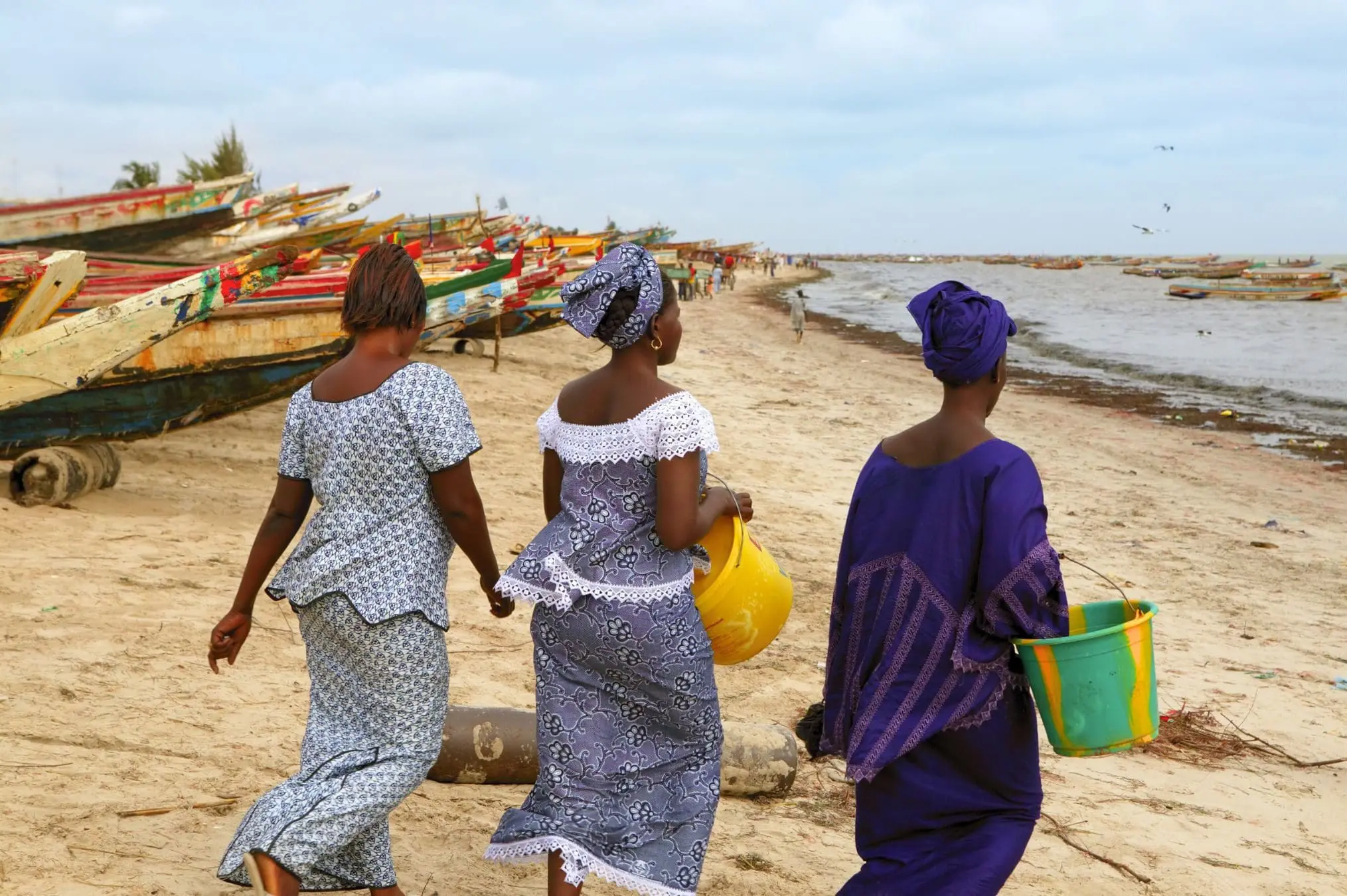
But Senegal’s particular magic is teranga. Where some places show you their sights, Senegal folds you in. The music, the markets, the meals shared from a single great platter, all of it says the same thing. You belong at this table.
Senegal at a Glance
Flight from JFK: About 7.5 to 8 hours, nonstop to Dakar. One of the shortest flights to Africa.
Entry: US travelers, no visa for stays under 90 days. A yellow fever vaccination is mandatory. Passport valid 6 months.
Best time to go: November to May, the dry season.
Language: French is official, with Wolof widely spoken.
Currency: The West African CFA franc.
When to Go
Senegal is warm and, for much of the year, dry. The comfortable window is November through May, with sunny days tempered along the coast by ocean breezes. The rainy, humid season runs roughly June to October. For a first trip, the dry months are the easy choice, and the short flight means you can go for a long weekend’s worth of days and still feel like you crossed an ocean, because you did.
What to See and Do
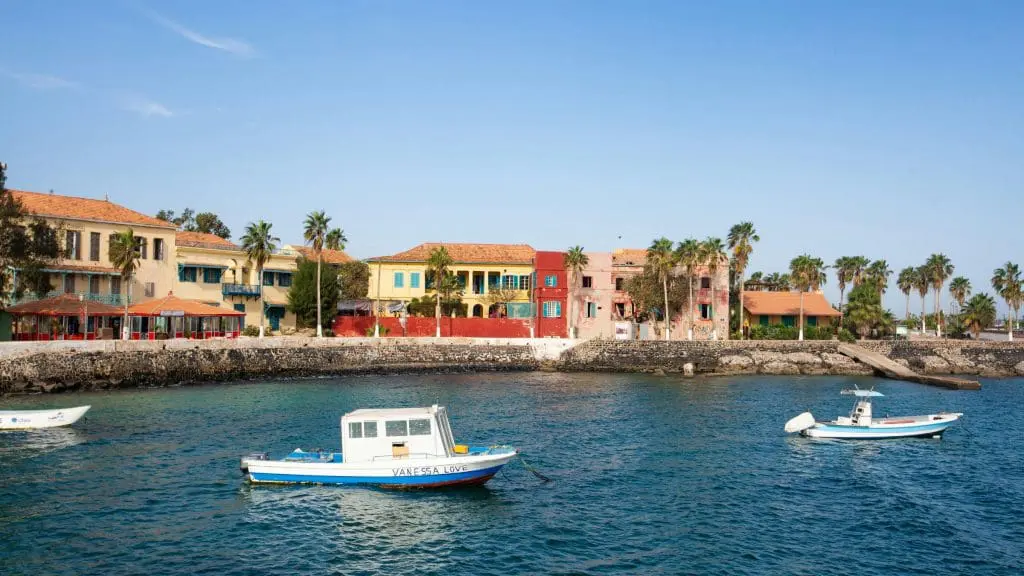
Gorée Island. A short ferry from Dakar, this UNESCO island holds the House of Slaves and the Door of No Return. It is quiet, beautiful, and devastating, and it is the heart of the trip. Give it time.
Dakar. The capital is alive with art, music, and motion. See the towering African Renaissance Monument, the largest statue on the continent, wander the markets, and feel the rhythm of a city that gave the world some of its greatest musicians.
Lake Retba, the Pink Lake. On the right day, its high-salt water glows a soft rose, surreal and beautiful.
Saint-Louis. A few hours north, this UNESCO-listed island city carries faded colonial-era architecture and a famous jazz tradition, a slower, atmospheric counterpoint to Dakar.
The music. Senegal runs on rhythm, from the thunder of the sabar drums to the mbalax that fills the night. Let yourself be pulled in.
What to Eat
Senegalese food is some of the best in West Africa, and you can taste the teranga in it. Start with thieboudienne, the national dish of fish and rice cooked in a rich tomato base, widely considered the ancestor of jollof itself. Then yassa, chicken or fish in a bright, tangy onion-and-lemon sauce, and mafe, a deep peanut stew that will ruin all other peanut stews for you. Cool it all down with bissap, the deep-red hibiscus drink, or bouye, made from baobab fruit.
What You Need to Know Before You Go
- Visa. None needed for stays under 90 days. Easy.
- Yellow fever. A yellow fever vaccination is mandatory, and proof can be checked on arrival. Carry your yellow card, and see a travel clinic about it, and malaria prevention, before you go.
- Passport. Valid six months. Here is the passport mistake that strands travelers.
- Language. French is the official language and you will hear less English than in Ghana or Kenya, so a few French phrases, or traveling with a group and a guide, smooths everything.
- Dress. Senegal is predominantly Muslim. Modest, covering clothing is respectful, especially away from the resorts and at religious sites.
- Safety. Senegal is widely regarded as one of West Africa’s most welcoming and stable destinations. Use the same city sense you would anywhere. Here is our honest take on safety.
We keep the current entry details for Senegal, and all eight destinations, in the free Our Africa guide.
Why You Belong Here
Teranga means you are received as family before you are anything else. Senegal does not host you. It claims you.
And like Cape Coast in Ghana, Gorée lets you stand exactly where ancestors were taken, and then do the thing they were never allowed to do: turn around and walk freely back. To make that walk, and then to be folded into a culture that treats you as kin, is a particular kind of healing. You came looking for a country. You may find a family.
When You Are Ready
Senegal is the gentle, soulful return, and the short flight makes it one of the easiest first steps onto the continent you could take.
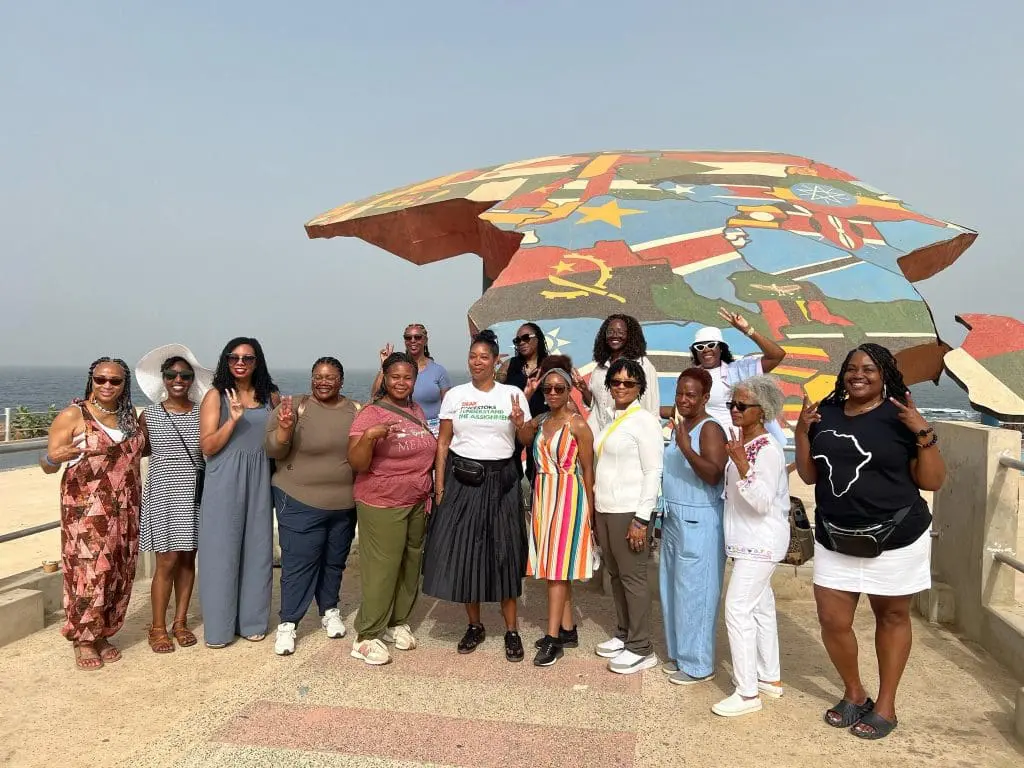
The yellow fever requirement, the French, the ferry to Gorée, all of it is simpler when you go with women who have done it before, and a host who can carry the language and the logistics. That is the whole point of going together.
Get the Free Our Africa Guide
Real flight times, current entry rules, the yellow fever requirement, and a country-by-country readiness checklist, with Senegal and seven more destinations. Drop your name, email, and number, and it is yours.
Travel Divas. Where Black Women Travel.