

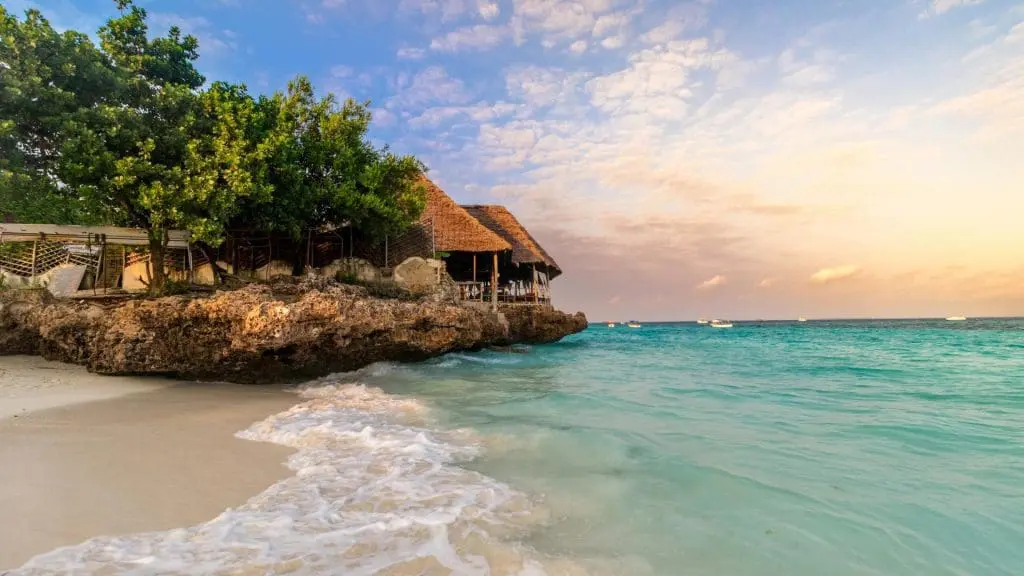
You have seen the photos and assumed they were edited. They were not. The water in Zanzibar really is that clear, a turquoise so bright and so transparent you can stand waist-deep and watch your own feet, the kind of water that makes you laugh out loud the first time you walk into it.
But Zanzibar is more than its postcard. Beyond the beaches is a thousand-year-old crossroads of cultures, a spice island, a Swahili soul, and a history that runs deep. Here is what to know before you go, and what you will find when you do.
Why Zanzibar Is More Than a Beach
Zanzibar is an island off the coast of Tanzania, and for centuries it sat at the center of the Indian Ocean trade, where Africa, Arabia, India, and Persia met and mingled. That history is the island’s real flavor.
You feel it most in Stone Town, the old quarter where carved wooden doors, winding lanes, and call-to-prayer all blend into something that could be nowhere else on earth. It is Swahili culture at its richest. It is also where you find the harder history: Zanzibar was a major hub of the East African slave trade, and the memorial at the old slave market is a quiet, necessary stop, a reminder that the ocean carried our story here too.
So yes, come for the water. But let the island show you the rest.

Zanzibar at a Glance
Flight from JFK: About 18 to 20 hours, with one stop. There is no nonstop, so most women come via the Gulf or pair it with a mainland safari.
Entry: Zanzibar uses the Tanzania e-Visa. US travelers must buy the Multiple-Entry Visa, about $100, and Zanzibar also requires its own mandatory travel insurance, about $44.
Best time to go: June to October, and December to February.
Language: Swahili, with English widely used in tourism.
Currency: The Tanzanian shilling, with US dollars widely accepted.
When to Go
Zanzibar is tropical and warm all year, but the comfortable, dry windows are June through October, which is cooler and sunny, and December through February, which is hot and dry. Avoid the long rains from March to May, when downpours can interrupt beach days. The June-to-October window also happens to line up with the best safari season on the mainland, which is why so many women do both in one trip.
What to See and Do
The beaches. Nungwi and Kendwa on the north tip have the calmest, clearest swimming and the famous sunsets. Paje on the east is the breezy, laid-back side. This is the doing-nothing part of the trip, and it is glorious.
Stone Town. Wander with no plan. See the old fort, the House of Wonders, the birthplace of Freddie Mercury, and the slave-trade memorial. Then get pleasantly lost in the lanes.
A spice farm tour. Zanzibar is the Spice Island, and a farm visit, tasting cloves, vanilla, cinnamon, and nutmeg straight off the plant, is a delight for every sense.
On the water. Sail a traditional dhow at sunset, snorkel the reefs, and take a boat to Nakupenda, a sandbank that appears in the middle of the turquoise at low tide for a barefoot lunch surrounded by ocean.
Jozani Forest. Meet the rare red colobus monkeys found only here.
What to Eat
Zanzibar’s food is Swahili cooking perfumed with the island’s own spices. Feast on fresh seafood pulled in that morning, fragrant pilau and biryani, and the local street favorites: Zanzibar pizza, a stuffed, folded griddle treat, and urojo, the tangy “Zanzibar mix” soup. Best of all is the Forodhani Gardens night market in Stone Town, where the sea breeze, the grills, and the lantern light turn dinner into an event.
What You Need to Know Before You Go
- Visa. Zanzibar is part of Tanzania, so you need a Tanzania visa, and US citizens are specifically required to buy the Multiple-Entry Visa, around $100, not the cheaper single-entry. Apply for the e-Visa online before you fly. One visa covers both the mainland and the island.
- Mandatory insurance. This one surprises people. Zanzibar requires its own travel insurance, about $44, purchased online before you arrive, with proof shown on entry. Do not skip it.
- Passport. Valid six months with blank pages. Here is the passport mistake that strands travelers.
- Dress. Zanzibar is predominantly Muslim. Swimwear is perfectly fine at the beaches and resorts, but in Stone Town and the villages, cover your shoulders and knees out of respect. A light scarf and a long skirt go a long way.
- Getting there. No nonstop, so expect one stop, and consider pairing the island with a safari to make the long trip more than worth it.
We keep the current entry details for Zanzibar, and all eight destinations, in the free Our Africa guide.
Why You Belong Here
Some homecomings are heavy. This one is gentle.
After the dungeons and the museums and the weight of the history, Zanzibar is the place to set it all down. To float in water that holds you. To eat slowly, sleep deeply, and let the continent simply be kind to you for a while. You spent years pouring into everyone else. The island asks nothing of you but to rest, and you have more than earned it.
When You Are Ready
Zanzibar is the perfect ending. Many women pair it with a Kenya or Tanzania safari, trading the savanna for the sea, so the trip closes with their feet in the sand.
That kind of routing, safari to island, two countries’ worth of logistics, visas, and timing, is exactly what is easier when you go with women who have done it before. That is the whole point of going together.
See the safari that pairs with it.
Get the Free Our Africa Guide
Real flight times, current entry rules, the Zanzibar insurance detail, and a country-by-country readiness checklist, with Zanzibar and seven more destinations. Drop your name, email, and number, and it is yours.
Travel Divas. Where Black Women Travel.