
A Black woman’s guide to reclaiming your ancestral legacy at Giza.
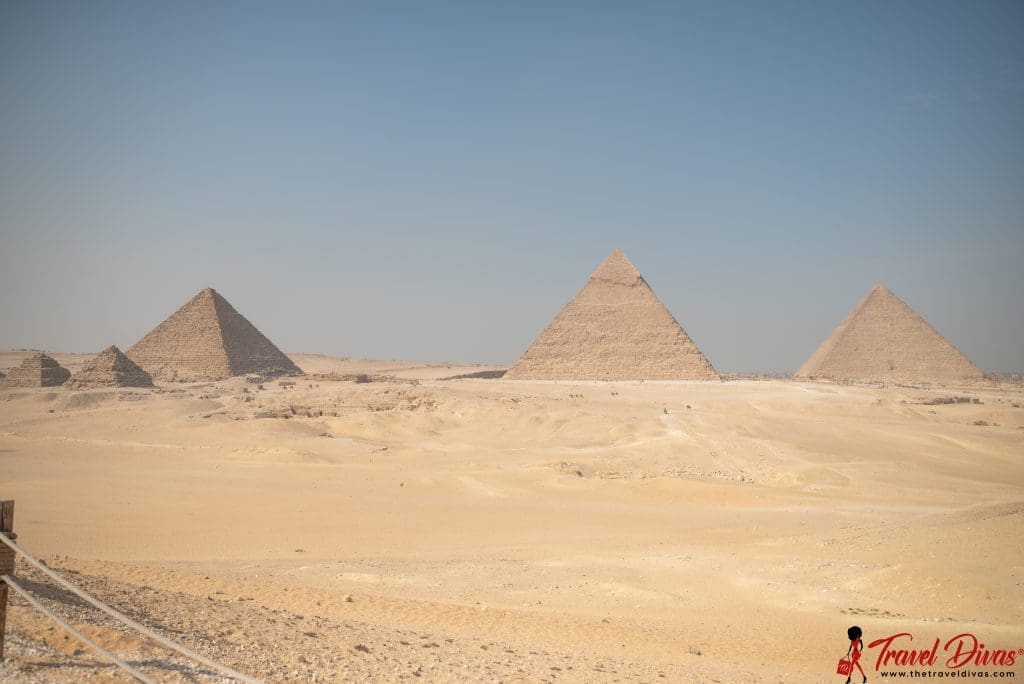
I stood at the base of the Great Pyramid of Giza with tears streaming down my face. Not because of the sheer scale of it—though at 481 feet tall and 2.3 million limestone blocks, the scale is incomprehensible. I cried because everything I’d been taught about this place was incomplete. Sanitized. Whitewashed.
The tour guides will tell you about pharaohs and burial chambers. The documentaries will marvel at the engineering. But what they often fail to mention—what they’ve spent centuries trying to erase—is that you’re standing before one of the greatest achievements of African civilization. Built on African soil. By African hands. Under African leadership.
This isn’t Afrocentric revisionism. This is geography. This is history. This is what they don’t want you to feel when you visit the pyramids.
The Lie They Told Us in School
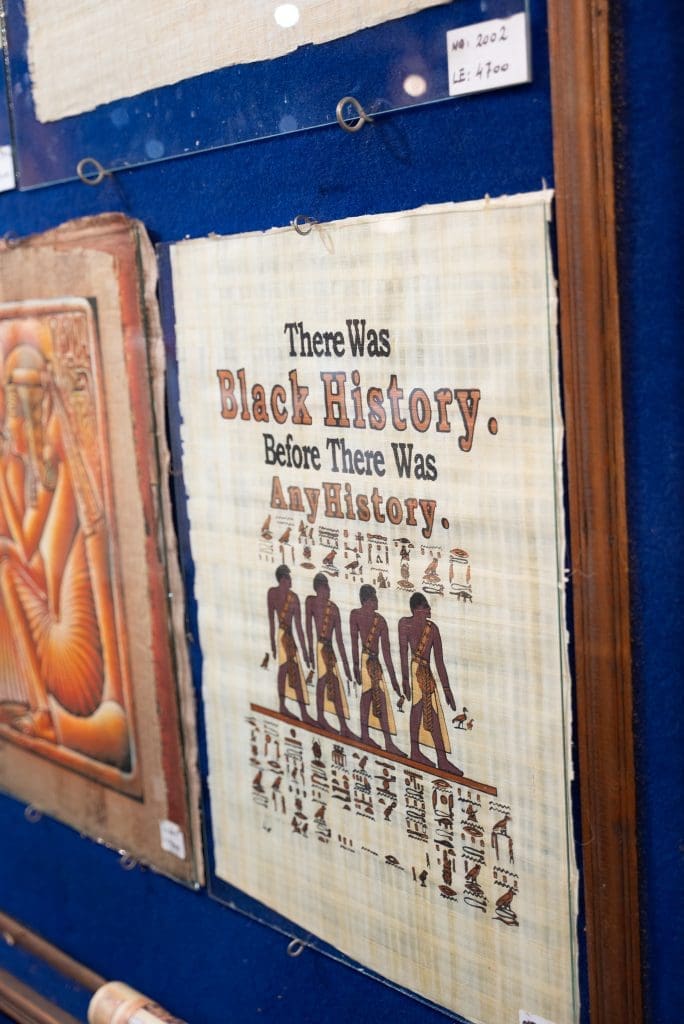
Let’s start with what most of us learned: Ancient Egypt was somehow separate from “Black Africa.” It was the cradle of civilization, yes, but it belonged to the Mediterranean world. The Middle East. Anywhere but the continent it literally sits on.
This narrative didn’t happen by accident. European scholars of the 18th and 19th centuries—the same era that justified colonialism and the transatlantic slave trade—could not reconcile the existence of an advanced African civilization with their theories of white supremacy. So they simply removed Egypt from Africa. In textbooks, in museums, in the cultural imagination.
The ancient Egyptians called their land Kemet—“the Black Land.” Scholars have debated whether this referred to the rich black soil of the Nile Valley or to the people themselves. But consider this: the Egyptians contrasted Kemet with Deshret, “the Red Land,” referring to the desert. They named themselves by their skin, and they named the desert by its sand.
Ancient Greek historians—Herodotus, Strabo, Diodorus—who actually visited Egypt described the people as having “black skin and woolly hair.” These are eyewitness accounts from Europeans themselves, centuries before anyone had a reason to distort them.
No, Slaves Did Not Build the Pyramids
This is perhaps the most persistent myth: that the pyramids were built by enslaved people, often specifically identified as Hebrew slaves from the Biblical Exodus narrative. Hollywood has reinforced this image for generations—whipped slaves dragging massive stones under the scorching sun.
Here’s what archaeology actually tells us: the pyramids were built by paid, skilled workers.
In 1990, archaeologists discovered workers’ tombs near the pyramids of Giza. The location alone was significant—slaves would never have been buried so close to the sacred tombs of pharaohs. The bodies were prepared for the afterlife with care, surrounded by supplies and provisions. These were respected laborers, not disposable slaves.
Excavations revealed a workers’ village with dormitories, bakeries, breweries, and medical facilities. Analysis of animal bones showed these workers were eating the best cuts of beef. According to Dr. Zahi Hawass, Egypt’s former Minister of Antiquities, evidence indicates approximately 10,000 workers ate 21 cattle and 23 sheep daily—sent to them from farms across Egypt.
Graffiti left by the workers themselves has been found throughout the pyramids—team names like “the Drunkards of Menkaure” and “the Followers of the Powerful White Crown of Khufu.” These were work crews who took pride in their assignments, not enslaved people stripped of identity.
The slave narrative served a purpose: it allowed Western civilization to admire Egyptian achievement while denying African agency. If slaves built the pyramids, then the pyramids represent oppression, not African genius. The truth is far more powerful.
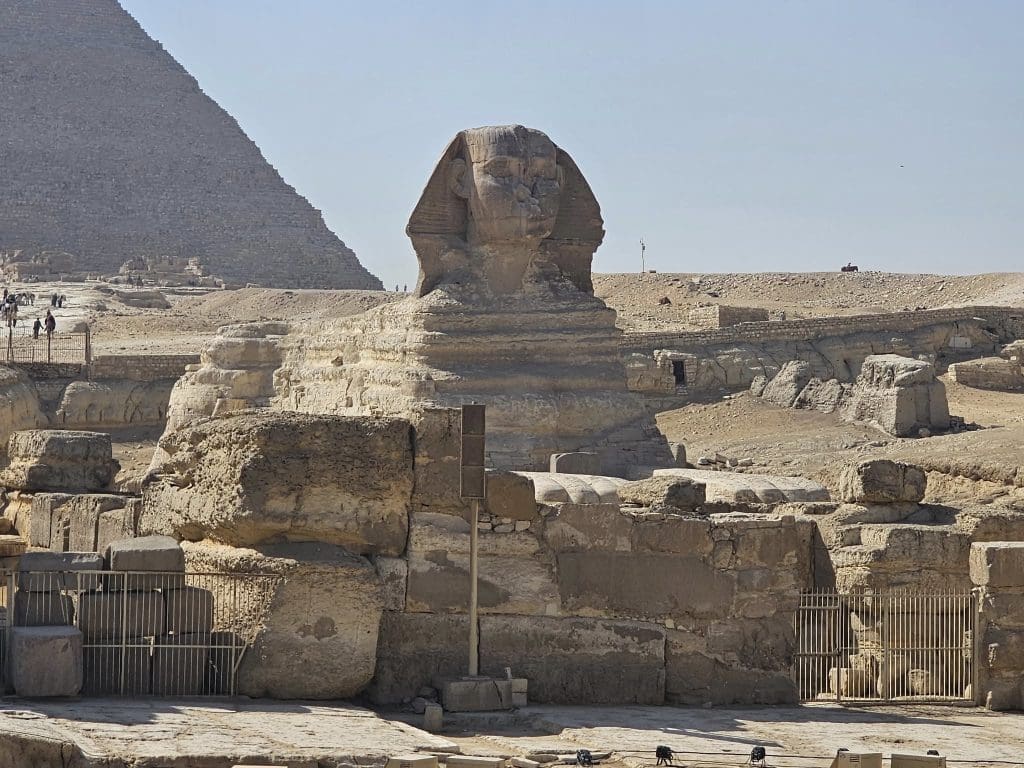
The Sphinx’s Missing Nose: Myths and Reality
You’ve probably heard that Napoleon’s troops shot the nose off the Sphinx during target practice. It’s a satisfying story—European invaders literally defacing African heritage. But it’s not true, at least not in that form.
Drawings by Danish explorer Frederic Louis Norden from 1737—over 60 years before Napoleon arrived—clearly show the Sphinx already missing its nose. Historical evidence points to a 14th-century Sufi Muslim named Muhammad Sa’im al-Dahr, who was reportedly outraged that local peasants made offerings to the Sphinx for good harvests. He chiseled off the nose as an act of religious iconoclasm and was later executed for vandalism.
But here’s the deeper truth that circulates in our communities: the systematic destruction of noses on Egyptian statues wasn’t random. Ancient Egyptians believed their statues housed the living spirit of the person depicted. The nose was the breath of life. Destroying it was believed to “kill” the spirit within.
More significantly, noses are ethnic identifiers. The broad noses on many Egyptian statues—including early European descriptions of the Sphinx noting its “African features”—told a story that subsequent conquerors and scholars wanted erased. The pattern of missing noses across Egyptian antiquities raises questions that mainstream Egyptology has been slow to address.
The Black Pharaohs They Don’t Teach You About
When we talk about ancient Egypt, we rarely hear about the 25th Dynasty—the Kushite kings from Nubia (modern-day Sudan) who conquered and ruled Egypt for nearly a century, from around 747 to 656 BCE. These rulers are explicitly called “the Black Pharaohs” in historical records.
King Taharqa, one of the most powerful of these rulers, controlled an empire stretching from the Mediterranean to the confluence of the Blue and White Niles. His pyramid still stands at Nuri in Sudan. His inscriptions proclaim divine favor and military prowess across the lands of the Nile.
Here’s something else they don’t tell you: Sudan has more pyramids than Egypt. Over 200 Nubian pyramids stand at sites like Meroë, compared to Egypt’s approximately 130. The Kushite civilization lasted over 1,000 years, developed its own writing system (Meroitic), and maintained African cultural traditions even while absorbing some Egyptian practices.
These pyramids are smaller and steeper than their Egyptian counterparts, with distinct architectural features. They’re also virtually empty of tourists. While millions visit Giza annually, most travelers have never heard of Meroë. Ask yourself why.
The Scholar Who Changed Everything
If you visit the pyramids and feel something stirring in your spirit, you should know the name Cheikh Anta Diop. This Senegalese historian, physicist, and anthropologist dedicated his life to proving what mainstream academia refused to accept: that ancient Egypt was fundamentally an African civilization.
In 1954, Diop published Nations Nègres et Culture (Black Nations and Culture), arguing that ancient Egypt’s population was indigenous African, that Egyptian language shared roots with other African languages, and that Egyptian civilization influenced subsequent African cultures throughout the continent. The Sorbonne refused to assemble a jury to evaluate his doctoral thesis—not because his research was flawed, but because his conclusions were politically unacceptable.
Diop eventually earned his doctorate in 1960 and went on to analyze melanin content in Egyptian mummies, demonstrating pigmentation consistent with sub-Saharan African populations. He established Africa’s first radiocarbon dating laboratory. He developed linguistic evidence connecting ancient Egyptian to Wolof and other African languages.
In 1974, UNESCO convened a symposium in Cairo where Diop presented his research alongside the world’s leading Egyptologists. The resulting consensus acknowledged African influence on Egyptian civilization in ways that had been denied for centuries. As Kenyan historian Bethwell Allan Ogot wrote, “Cheikh Anta Diop wrested Egyptian civilization from the Egyptologists and restored it to the mainstream of African history.”
Why “Ancient Aliens” Is Racism in Disguise
Let’s address the elephant in the room: the persistent theory that extraterrestrials built the pyramids. You’ve seen the TV shows. You’ve heard the theories. And you should understand exactly what they’re really saying.
When someone looks at the precision of the Great Pyramid—its near-perfect alignment with true north, its mathematical relationships to Earth’s dimensions, its engineering that modern architects still study—and concludes that humans couldn’t possibly have built this, they’re not making a scientific argument. They’re making a racist one.
Notice which ancient structures get the alien treatment: the Egyptian pyramids, the Nazca Lines in Peru, Great Zimbabwe in southern Africa, the Moai of Easter Island. What do these sites have in common? They were built by non-white peoples. Meanwhile, no one suggests aliens built the Parthenon or the Colosseum.
The alien theory is the modern continuation of colonial ideology: the belief that African and indigenous peoples were incapable of sophisticated achievement. Rather than acknowledge African genius, conspiracy theorists would rather credit imaginary extraterrestrials.
The pyramids were built by human beings. African human beings. With mathematics, engineering, organizational systems, and labor practices that we’re still working to fully understand. That’s not a consolation prize—it’s a triumph.
What You’ll Feel When You Stand There
Knowing all of this, what’s it like to actually visit the pyramids as a Black woman?
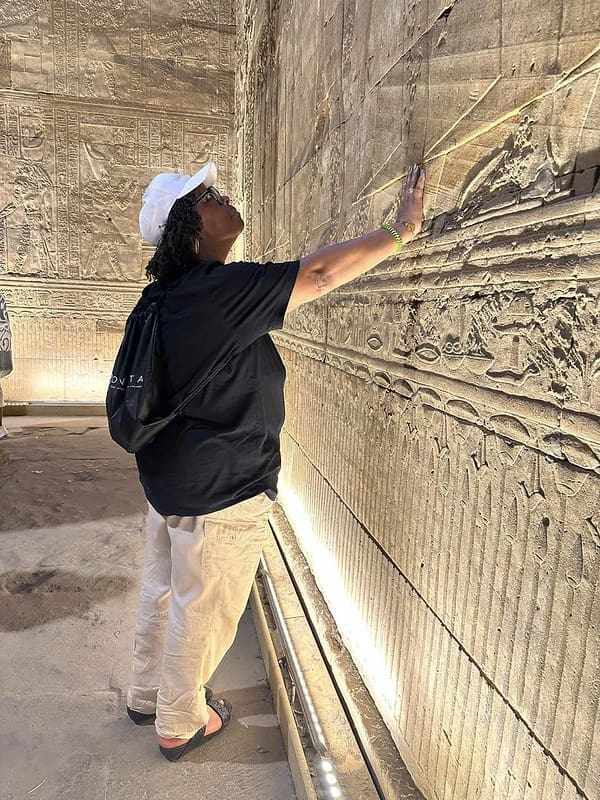
It’s overwhelming. And I don’t mean the crowds or the touts or the heat—though those are real. I mean the weight of standing somewhere that connects you to 4,500 years of history. History that belongs to you, even if the world has tried to tell you otherwise.
You might feel rage at what’s been hidden from you. You might feel grief for the erasure. You might feel an inexplicable sense of homecoming, even if your ancestors were taken from West Africa, thousands of miles away. African civilization was interconnected. The Nile was a highway of culture, trade, and people.
I watched a sister in our group fall to her knees in the sand, weeping. She said she felt the presence of ancestors. She said she finally understood why she’d always been drawn to Egypt without knowing why. She said she felt, for the first time, that she came from something magnificent.
That’s not mysticism. That’s what happens when you reclaim a heritage that was stolen from you.
How to Experience the Pyramids on Your Own Terms
Hire an Afrocentric guide: Standard tour guides will give you the standard narrative. Look for guides—often found through Black travel groups—who center African history and won’t flinch when you ask about Kemet, the Black Pharaohs, or the racial politics of Egyptology.
Go at sunrise: The pyramids open at 8 AM, but VIP tickets and private tours can get you there earlier. Fewer crowds mean more space for contemplation, prayer, or whatever spiritual practice you need.
Enter the Great Pyramid: It costs extra, and there’s nothing inside anymore—the treasures were looted long ago. But the experience of climbing through that narrow passage and standing in the King’s Chamber is profound. Some visitors meditate there. Some pray. Some simply breathe.
Visit the workers’ cemetery: This is where archaeologists found the tombs of pyramid builders. It’s less visited than the main pyramids but arguably more important—this is where the narrative of enslaved labor gets dismantled.
Look at the faces: In the Egyptian Museum (and soon the Grand Egyptian Museum), pay attention to the statuary. Look at the features. Notice the skin tones in painted reliefs—the reddish-brown of men, the yellow-brown of women, the depictions of Nubians who were sometimes adversaries and sometimes pharaohs themselves.Bring something with you: Many diaspora visitors bring soil or water from their homelands to leave at the pyramids, or collect sand to take home. It’s a symbolic gesture of connection across time and geography.
Beyond Giza: The Sites That Complete the Picture
Saqqara: The Step Pyramid of Djoser, designed by Imhotep—one of history’s first named architects—predates Giza and represents the beginning of pyramid construction. Imhotep was later deified and worshipped as a god of medicine and wisdom.
Luxor and Karnak: The temple complexes of Upper Egypt contain some of the most vivid depictions of ancient Egyptian life. The wall paintings here have retained their colors for millennia—and those colors tell stories about who these people were.
Abu Simbel: The massive temple of Ramses II, with its four colossal statues, is carved directly into rock near the Sudanese border. Pay attention to the defeated enemies depicted at his feet—and notice how the Nubians among them are shown.
Aswan and Nubian villages: The Nubian communities along the Nile represent living cultural continuity. Their colorful homes, distinct language, and proud heritage are a reminder that Africa’s history didn’t end with the pharaohs.
Sudan (if you can): The pyramids of Meroë are a bucket-list destination for anyone serious about understanding African pyramid-building traditions. They’re harder to reach and less developed for tourism—but that’s also their appeal.
This Is Your Inheritance
When you stand before the pyramids, you’re not standing before someone else’s history. You’re standing before a monument to what African people accomplished when they had the freedom, resources, and time to build.
The transatlantic slave trade stole more than bodies. It stole our names. Our languages. Our religions. Our sense of having come from anywhere at all. But it couldn’t steal this. The pyramids are still there. The hieroglyphics can still be read. The workers’ tombs still tell their stories.
And now you know what they don’t want you to know: this is your inheritance. These were your ancestors’ cousins, cultural kin, fellow children of the continent. What they built 4,500 years ago still stands as proof that Africa has always been magnificent.
Go to Egypt. Stand at the pyramids. Let the tears come if they need to. And know, finally, where you come from.
You come from greatness.
Ready to experience Egypt with sisters who understand what this trip really means?
Travel Divas offers luxury group trips to Egypt where we center African history, visit sites the standard tours skip, and hold space for the emotional journey this trip becomes. Because this isn’t just tourism—it’s pilgrimage. Learn more at TravelDivas.com